Kitale · Kenya
Clean water for schools and communities in Kenya
School wells, community water projects and filtration systems, led by our team at the Kitale office, from the first request to years after the water flows.
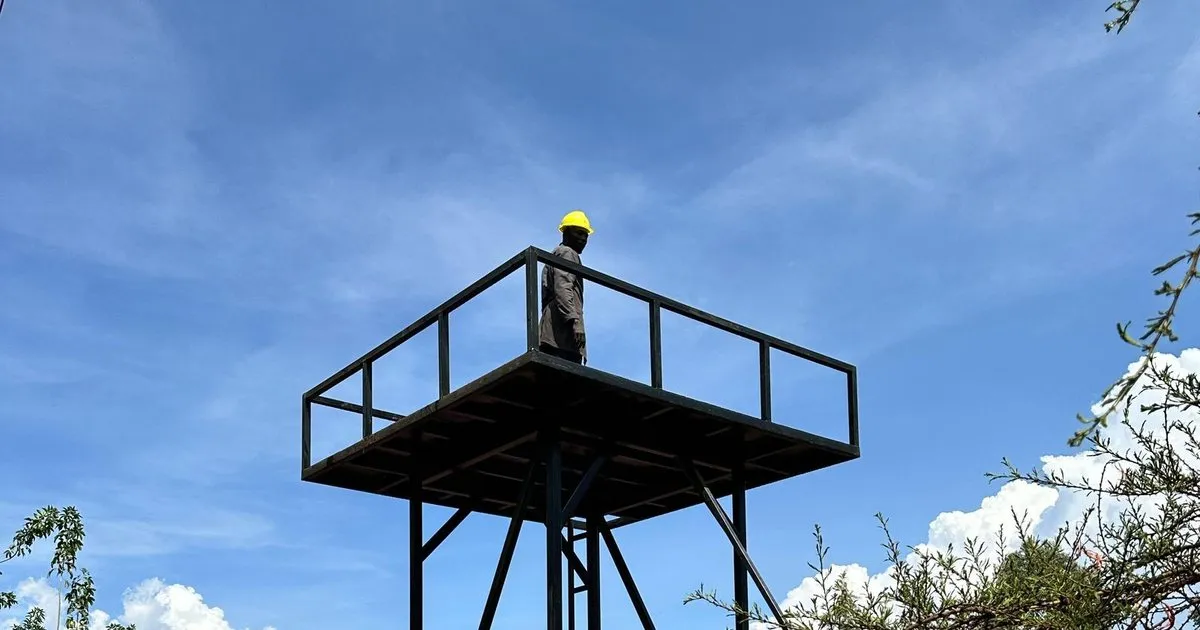 Elevated water tower
Working in Kenya since 2021. We finished 20 projects in 2025 and 14 so far in 2026.
Long relationships with schools and communities
Most of our work is around Eldoret, in Uasin Gishu and Nandi counties, with projects near Kisumu and Naivasha too. We build long relationships with schools and communities, from the first request to years after the water flows. For some of them our work goes beyond the well, to classrooms, a health dispensary and livelihoods.
What we do
- School wells 24
- Community water projects 2
- Filtration systems 1
- Beyond the well 10
Who we serve
- Schools 29
- Health clinics 7
- Churches 2
- Villages and communities 2
- Families 1
Where we work
- Uasin Gishu (Eldoret) 18
- Nandi 11
- Naivasha area 2
- Kisumu area 1
- Mombasa 1
- Completed
- Under construction
- Looking for funding
Where our projects are
Choose a dot to see the projects there.
Some dots mark the village or town rather than the exact site. Map outline © OpenStreetMap contributors.
Kapsaret, Eldoret
One community, eight projects: Chepkongi
Families in Chepkongi used to walk about 6 miles to fetch water from the Sosiani River, which is not safe to drink, and about 8 miles to reach health care. Our work began with water: a borehole and elevated tower for the dispensary, and another for the primary school. Both reach 150 metres, with electric pumps.
With water on site, we went on to complete the dispensary: plumbing and electrical work, beds, furniture, medical equipment and medicines, an incinerator and a fence and gate. Care is now close to home, so people walk far less and the community is healthier.
- WaterDispensary: well and tower2025
- WaterPrimary school: well and tower2025
- HealthDispensary: beds, equipment, supplies and furniture2025
- HealthDispensary: gate and fencing2025
- HealthDispensary: incinerator2025
- HealthDispensary: plumbing, electrical, washrooms2025
- SchoolPrimary school: desks and furniture2025
- SchoolPrimary school: paint2025
When water is where a partnership begins
Water is our main work, and for some communities it is where a longer partnership begins. We have also taken on 10 projects beyond the well so far: 4 for health, 5 for schools and 1 for livelihoods.
Health
4 completed
Schools
4 completed · 1 under construction
Livelihoods
1 looking for funding
- SchoolsJob’s School for the needy, NdalatA dormitory and kitchenUnder construction
- LivelihoodsKaptebee PigstyA farming project for familiesLooking for funding
- SchoolsNzoia Bridge Primary School6 classrooms and an administration blockCompleted · 2026
- HealthChepkongi DispensaryEquipment, fencing, incinerator, plumbing and washroomsCompleted · 2025
Projects in Kenya
Every project we have finished, are building now, or are ready to start. Choose one to see its photos and details.
The need for safe water in Kenya
The gaps are widest in the countryside around our projects.
Kenyans lack even a basic drinking-water service. About 9 in 10 of them live in rural areas.
WHO/UNICEF JMP, 2024 (our calculation)of Kenyans drink untreated surface water from rivers, dams, ponds or streams. In rural areas it is 1 in 4.
WHO/UNICEF JMP, 2024of people in Nandi County have a basic water service, compared with 79% in neighbouring Uasin Gishu.
Kenya DHS, 2022of groundwater samples from domestic wells in Kenya’s Rift Valley exceed WHO’s fluoride limit of 1.5 mg/L.
Mwiathi et al., 2022Town and country
Basic access in Kenya rose from 58% of people in 2015 to 66% in 2024, but the divide is wide: 89% of people in urban areas have a basic service, against 56% in rural areas.
WHO/UNICEF JMP, 2024Around Eldoret and Kitale
In Nandi, fewer than half of people have a basic service and about 1 in 4 drink surface water. In Trans Nzoia, home to our Kitale office, 40% depend on protected hand-dug wells. Where water has to be fetched, a woman or girl does it for 75% of Kenyans.
Kenya DHS, 2022Fluoride at Longonot
The Rift Valley’s volcanic rocks release fluoride into groundwater, and boiling does not remove it. Our project at Longonot DEB Primary School is a reverse osmosis system that removes fluoride, so the children have safe water to drink.
Mwiathi et al., 2022 · Kenya News Agency · Okore et al., 2026“Basic” water means an improved source, such as a borehole, protected well or tap, that takes 30 minutes or less to reach and collect from, including queuing. Figures marked “our calculation” apply the WHO/UNICEF percentage to the population estimate WHO/UNICEF use.
Current needs
3 projects are ready to start once funded. Kaptebee Pigsty needs $9,253; the other 2 are still being costed.
Visit or call our Kitale office
Schools and communities can ask us about a water project, and anyone can get in touch about our work.
Kenya office
- Address
- Mega Centre, 3rd Floor
Makasembo Road, Kitale - Phone
- +254 791 674 001
- [email protected]
Our team
Our Country Director and Project Manager work with communities from the first request through site selection and drilling, and stay in touch long after the well is finished.